

Naturally Beautiful – How Much Is Too Much?
Between self-care, social pressure, and aesthetic medicine
A topic that concerns all of us
We cut our hair, take care of our skin, exercise, and pay attention to what we eat. For many people, looking after their appearance is simply part of everyday life.
And yet, something changes when it comes to aesthetic treatments.
Botox, fillers, or skin procedures feel like a logical next step for some, while for others they represent a line that should not be crossed.
So the real question is not:
Do we change our appearance?
But rather:
When does self-care become too much?
Why we want to change our appearance in the first place
The desire to look good is not superficial. It is deeply rooted in our social behavior.
We want to:
- appear attractive
- look healthy
- be perceived as “normal”
- recognize ourselves in the mirror
This has far less to do with vanity than many people assume.
It is about belonging, self-image, and how we are perceived by others.
An important point:
The way we see ourselves is never completely independent.
It is always shaped in comparison to others.
How comparison has changed
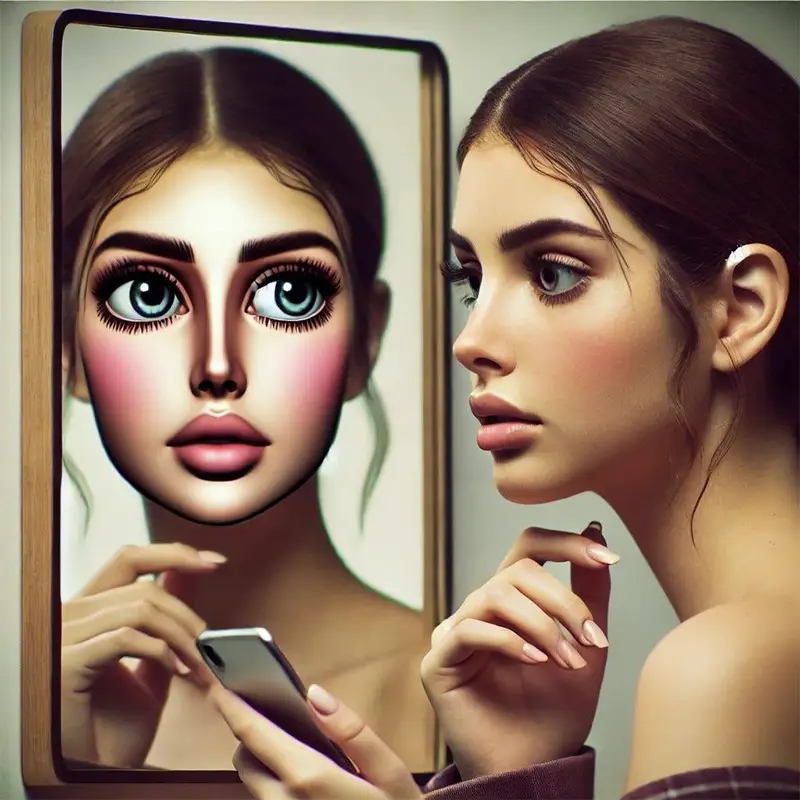
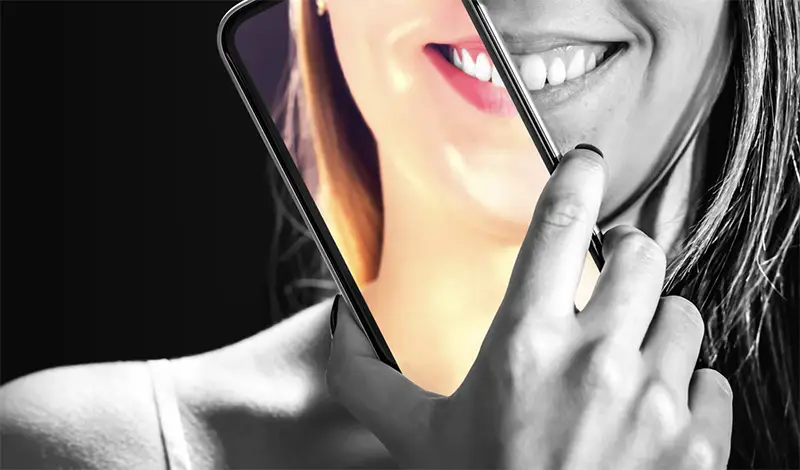
In the past, we mainly compared ourselves to people in our immediate environment – colleagues, friends, family.
Today, comparison has become limitless.
Social media constantly exposes us to optimized images:
- flawless skin
- defined facial features
- seemingly perfect proportions
But these images are often not reality.
They are a combination of lighting, angles, filters, and selection.
The problem is not that these images exist.
The problem is that they become our standard.
Beauty has real consequences
Our appearance influences how we are perceived – often more than we realize.
In sociology, we speak of:
- Lookism – judging people based on appearance
- Ageism – discrimination based on age
- Pretty privilege – advantages for those perceived as attractive
- Halo effect – attractive people are often automatically seen as more competent or likable
These effects usually happen unconsciously.
But they are real – and they shape behavior.
It is therefore not surprising that many people try to actively influence how they look.
When small changes can make a big difference
Aesthetic medicine can be very helpful in this context.
It is not always about transformation.
Often, it is about something else:
- looking more refreshed
- softening tired features
- recognizing yourself again
Many patients do not describe the result as “more beautiful,” but rather:
“I look like myself again.”
And that is a key point:
Good aesthetic medicine should not be obvious.
It should feel natural.
When things start to shift
As helpful as subtle changes can be, there is another dynamic.
It often begins harmlessly:
- a small correction
- a good result
- positive feedback
And then something subtle happens:
the goal begins to shift.
What felt sufficient yesterday suddenly no longer feels like enough.
- just a little more
- another small adjustment
- another comparison
At some point, it is no longer about feeling comfortable –
but about chasing an ideal.
The crucial difference
The difference between a healthy and a problematic approach rarely lies in the treatment itself.
It lies here:
| Healthy approach | Critical approach |
| I want to feel better | I want to become someone else |
| I have a clear goal | The goal keeps shifting |
| I decide consciously | I react to pressure |
| Less is more | More is better |
This boundary is individual.
But it is noticeable.
The role of expectations and emotions
An important and often overlooked aspect is the emotional motivation behind a treatment.
Not every wish is purely aesthetic.
Sometimes it is about:
- the feeling of having aged
- changes in life
- the desire to return to a previous version of oneself
This is where careful differentiation is essential.
Because not everything that is technically possible is actually meaningful.
Why saying “no” is sometimes the best decision
Aesthetic medicine is medicine.
And with that comes responsibility.
This includes:
- honest assessment of expectations
- recognizing limits
- and sometimes consciously advising against treatment
Not because something cannot be done.
But because it does not address the underlying issue.
What does “naturally beautiful” really mean?
Naturalness is not a fixed state.
It is a perception.
A face appears natural when:
- it fits the individual
- facial expressions are preserved
- no overcorrection is visible
Natural does not mean doing nothing.
It means doing the right thing – in the right amount.
Conclusion: How much is too much?
There is no fixed line.
But there is a useful guideline:
It is too much when you lose yourself.
It is appropriate when you recognize yourself.
In the end, one simple but important question remains:
Am I making this decision myself –
or am I reacting to external expectations?
💫 Be your own kind of beautiful 💫
FAQ – Frequently Asked Questions about Aesthetic Treatments
A treatment is appropriate when it is based on a clear and realistic goal, and aims to harmonize your appearance rather than fundamentally change it.
Warning signs may include:
- never feeling satisfied
- frequent treatments without a clear goal
- constant comparison with others
A good result should feel right – not just temporarily better.
When performed correctly, both are safe and well-established procedures.
Key factors are:
- the experience of the practitioner
- correct indication
- appropriate dosing
This depends on the procedure and individual goals.
Important:
👉 Regularity should not happen automatically, but be a conscious decision.
Yes – and that should always be the goal.
Natural results are characterized by:
- not being obvious
- preserving facial expression
- maintaining individuality
Both are essential.
However, without honest and thoughtful consultation, even the best technique is not enough.