
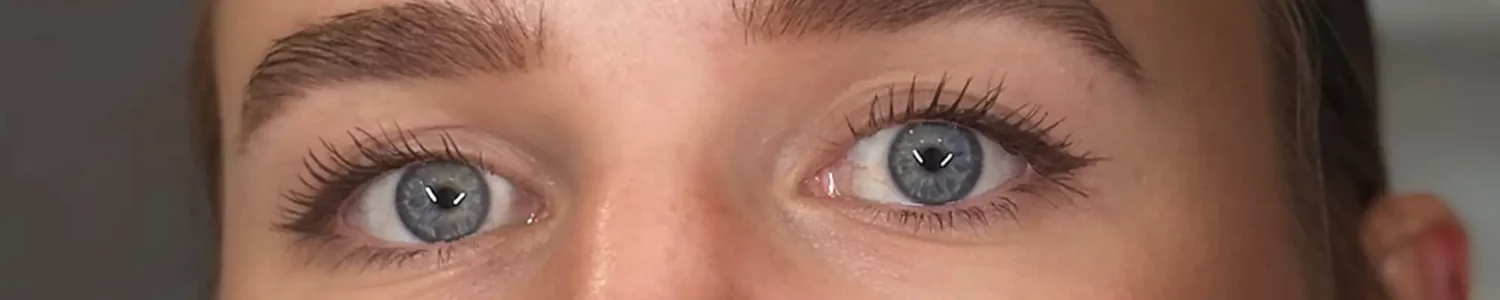
Upper Eyelid Surgery (Blepharoplasty): For a Bright, Refreshed Look
An open, alert look is a key expression of vitality and freshness. As we age, the delicate skin of the eyelids changes: it loses elasticity, the lid appears heavier, tired, or even sad. Upper eyelid lift surgery, medically called blepharoplasty, is therefore one of the most frequently performed procedures in plastic and aesthetic surgery worldwide.
Historical Development
The surgical correction of excess upper eyelid skin has a long history. As early as the early 20th century, techniques were described for removing excess skin and fat pads. At that time, instruments were still coarse, and precise anesthesia methods get improved.
With the advances in microsurgery and fine suture techniques in the 1960s and 1970s, upper blepharoplasty became a safe routine procedure. Today, patients benefit from refined methods, specialized instruments, and advanced suture techniques that allow for highly aesthetic, nearly invisible results.
Why Excess Skin Develops on the Upper Eyelid
Skin Laxity of the Upper Lid
With natural aging, the skin loses firmness. Collagen and elastin fibers break down, and the upper eyelid skin becomes thinner and less elastic. This leads to true skin redundancy that drapes over the lid margin, commonly known as “hooded eyelids.” This can be cosmetically bothersome and may even restrict the visual field.
Brow Ptosis (Sagging of the Eyebrow/Forehead)
The cause does not always lie within the eyelid itself. If the brow and forehead descend with age, the upper eyelid appears heavier, and the distance between the brow and the lid crease decreases.In this case, the issue is not excess lid skin but a brow ptosis, sagging of the brow–forehead complex. A precise assessment is to determine whether an upper blepharoplasty, a brow lift, or a combination of both will produce the best result.
Different Upper Eyelid Types
The anatomy and shape of the upper eyelid vary genetically and can be roughly categorized as:
- European eyelid: defined lid crease, clearly visible upper lid
- Hooded lid: redundant skin covering the crease
- Asian eyelid: minimal or absent lid crease, often multilayered muscle–tendon anatomy
- Deep-set eyes: visually smaller upper lid, prone to volume loss
Each type requires an individualized surgical plan and precise incision placement.
Surgical Technique – Precision with the Scalpel
A scalpel remains the superior instrument for this operation. It ensures a smooth, precise cut with clean and even wound edges. Compared with lasers or radiofrequency devices, this produces a calmer, more refined scar that becomes almost invisible within a few months.
In experienced hands, the procedure takes approximately 30–45 minutes and is performed under sterile microsurgical conditions.
How the Operation Works
- Marking: in a sitting position, the natural crease and the planned skin excision are precisely marked.
- Skin removal: fine, elliptical excision of excess skin.
- Removal of fat pads or fat repositioning: only if needed.
- Closure: with ultra-fine intradermal sutures under magnifying loupes.
The incision lies exactly within the natural lid crease—once healed, it becomes practically invisible.
Anesthesia – Local or Twilight Sedation
Upper blepharoplasty can be performed under local anesthesia or twilight sedation.
Local anesthesia:
The area is numbed precisely. You remain awake but feel no pain. Advantages: lower effort, faster recovery, lower cost.
Twilight sedation:
A very comfortable option for sensitive or anxious patients. You “dream” through the procedure, accompanied by an anesthesiologist. Disadvantage: slightly higher organizational and financial effort, but often extremely pleasant.
Both methods are safe. The choice depends on personal preference and medical assessment.
Suture Technique – Fine Work Under Magnification
The suture is placed intradermally, meaning beneath the skin surface—no visible stitches on top. Sutures are removed after about 7 days.
I use microsurgical suture material and always work with magnifying loupes. This results in smooth, tension-free wound edges that become virtually invisible after about six months. This meticulous technique is time-consuming, but crucial for an aesthetically perfect result.
Scarring and Healing
Healing occurs in phases:
- Week 1: mild swelling and bruising are normal; suture removal at day 6–7
- Week 2–3: residual swelling fades, lid crease forms naturally
- Month 2–3: scar becomes paler and barely palpable
- After 6 months: usually invisible
Good aftercare, cooling, and gentle skincare support optimal healing.
Aftercare & Restrictions
After suture removal and removal of the Steri-Strips, you continue care at home:
- Use of a special scar cream or cooling eye gel
- Avoid makeup for approx. 10 days
- No sports, sauna, or swimming for about 2 weeks
- Sun protection is essential to prevent pigmentation
Most patients are socially presentable again after one week.
Alternatives – From Adhesive Strips to Plasma Devices
There are various non-surgical approaches: adhesive lid tapes, radiofrequency devices, plasma pens, or thread lifting. However, none of these methods provide a lasting correction of true excess skin. Their effect is temporary or subtle. The surgical upper blepharoplasty remains the gold standard.
Longevity and Result
A single upper eyelid surgery can produce results lasting 10–15 years with minimal downtime. Many patients say they finally “recognize themselves” in the mirror again, more awake, fresher, and natural. No wonder it is the most commonly performed aesthetic operation worldwide.
My Experience – Over 1,000 Upper Eyelid Corrections
Over the course of my career, I have performed well over 1,000 upper eyelid surgeries. Each procedure is individual because every face, every eye, and every expression is unique.
The surgeon’s aesthetic eye is essential: determining exactly how much skin can be removed to open the gaze without compromising natural expression.
The goal is not a different face but the best version of yourself.
“Be your own kind of beautiful.”
— Dr. Felix Cromme, Plastic and Aesthetic Surgeon, Hamburg